
European airport passenger traffic slips for first time since pandemic recovery
05 Jun 2026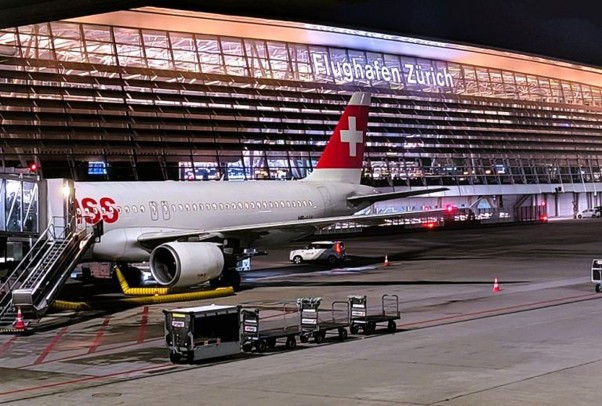
The strongest EU+ performances came from Slovakia (+125.2%), Slovenia (+14.6%), Malta (+13.5%), Estonia (+12.1%), and Poland (+8.3%).
At the other end of the scale, airports in Cyprus (-16.1%) and Iceland (-11.7%) recorded the sharpest declines, followed by Austria (-7.4%) and Switzerland (-6.1%).
Concerns Over Border Controls
ACI EUROPE Director General Olivier Jankovec said April represented a clear inflection point for European air traffic.
“While we were already seeing a normalization of passenger traffic growth after the strong post-pandemic bounce back, geopolitical instability—most notably the war in the Middle East—is now further weighing on growth and exposing significant differences in performance across markets,” he said.
Jankovec added that demand remains generally strong, airline capacity adjustments have been limited, and concerns over potential jet fuel shortages have eased.
However, he warned that border control procedures linked to the Schengen Entry/Exit System are creating severe disruption for travellers.
“Unless authorities are allowed to introduce greater flexibility, including fully suspending the system where operationally necessary, disruptions for passengers will intensify over the coming weeks and months,” he stated.
Spanish and Dutch Hubs Show Resilience
Among Europe’s major airports, Barcelona (+4.1%), Madrid (+3.3%), and Amsterdam Schiphol (+2.7%) were the only hubs to record passenger growth during April.
Munich (-16.4%) and Frankfurt (-11%) experienced the steepest declines, largely due to seven days of industrial action during the month.
Passenger traffic also fell at Istanbul Airport (-6.8%), Istanbul Sabiha Gökçen (-3.4%), London Gatwick (-8.8%), and London Heathrow (-5.3%). Meanwhile, Rome Fiumicino (-0.6%) and Paris Charles de Gaulle remained essentially flat.
Medium and Small Airports Outperform
Overall, Europe’s largest airports were most affected by the Middle East conflict. Major airports saw traffic decline by 3.5%, while Mega airports fell 1% and Large airports recorded marginal growth of just 0.1%.
In contrast, Medium airports grew 2.1% and Small airports increased 5.5%. Their predominantly intra-European route networks helped insulate them from long-haul market disruptions, while low-cost carriers maintained capacity and some travellers shifted from long-haul to short- and medium-haul destinations.
Despite this growth, Small airports continue to lag significantly behind pre-pandemic levels, with passenger traffic still 27.7% below 2019 volumes, highlighting ongoing structural challenges and concerns over long-term financial viability.