
Louvre Museum reopens Apollo Gallery following spectacular heist
22 Jul 2026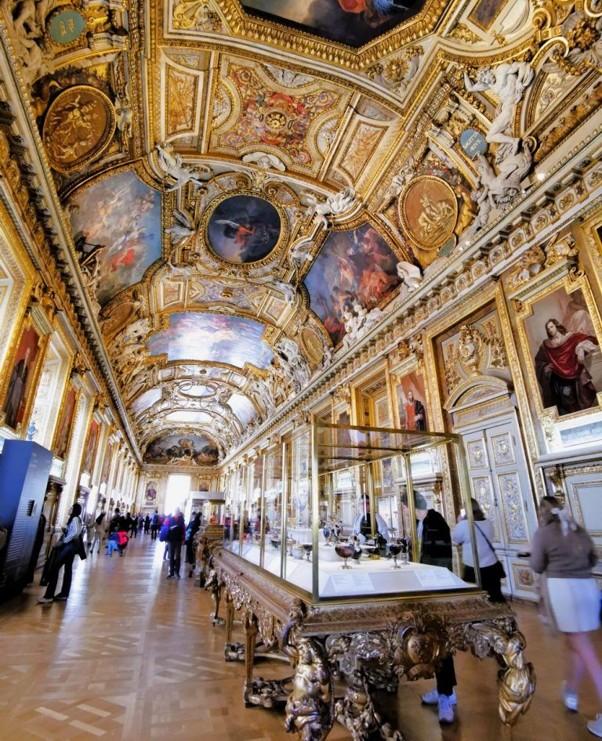
The Paris gallery welcomes visitors again on Wednesday, but without the display cases or the French Crown Jewels that made it one of the Louvre’s biggest attractions. Museum officials have removed all precious objects while plans are developed for a new high-security vault elsewhere in the museum.
The Apollo Gallery has remained closed since October 19, 2025, when a gang carried out a meticulously planned daylight raid that stunned the art world. Disguised as construction workers, the thieves used a cherry-picker truck to gain access through a vulnerable first-floor window overlooking the Seine.
The robbers completed what French Culture Minister Rachida Dati described as a “four-minute operation,” escaping with eight jewels from the French Crown collection worth an estimated €88 million (about US$102 million). The haul included necklaces, a tiara, a brooch and other priceless treasures from the Napoleon time.
One damaged item, the emerald-studded crown of Empress Eugénie, was later recovered outside the museum. The remaining jewels have so far never been found.
According to Louvre President Christophe Leribault, the Apollo Gallery is returning to its original 17th-century role as a ceremonial state gallery rather than a jewellery exhibition. The surviving Crown Jewels will eventually be moved to a purpose-built, windowless secure room elsewhere in the museum.
The theft triggered a global debate about museum security and led to sweeping changes at the Louvre. It also contributed to a leadership shake-up, with Christophe Leribault replacing former museum president Laurence des Cars.
A French parliamentary inquiry later concluded that security at the Louvre had been neglected for years, despite repeated warnings that the Apollo Gallery’s riverside windows represented a significant vulnerability.
Despite the absence of the Crown Jewels, the Apollo Gallery remains one of the Louvre’s most spectacular baroque interiors. Its soaring vaulted ceiling, decorated by artists including Charles Le Brun, inspired Versailles’ Hall of Mirrors and continues to rank among the museum’s architectural highlights.
For travellers visiting Paris, the reopening restores access to one of the Louvre’s finest historic spaces, even as the museum continues to rebuild confidence following one of the most audacious art crimes in recent memory.
The museum is home to more than 33,000 works spanning antiquities, sculpture and painting — from Mesopotamia, Egypt and the classical world to European masters. Its star attractions include the Mona Lisa, as well as the Venus de Milo and the Winged Victory of Samothrace.