
U.S.A. and Israel attacks on Iran impact air movements in the Gulf (Update 1.00pm CET)
28 Feb 2026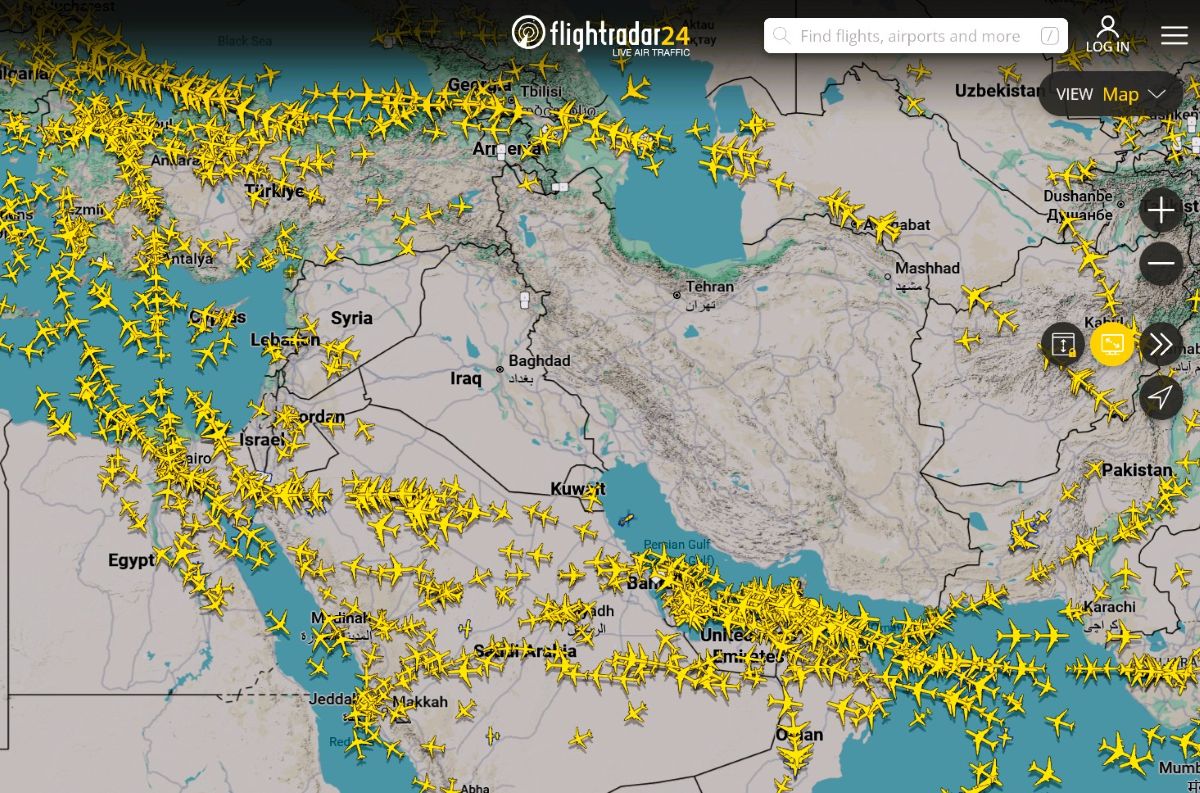
They have triggered a series of airspace closures and operational changes affecting airlines and passengers alike.
Closure of airspace is however limited to three countries for now: Iran, Iraq and Israel. The three countries have imposed temporary airspace restrictions or closures, forcing airlines to reroute flights along longer corridors.
The restrictions are particularly affecting key east–west traffic flows linking Europe and Asia via major Gulf hubs such as Dubai, Doha, Abu Dhabi and Riyadh. Some of these hubs remain operational, but schedules are under pressure as airlines adjust routes to avoid sensitive airspace. According to the website Flightradar24.com, flight paths over an air corridor linking Bahrain to Qatar, the UAE and Muscat are overcrowded.
The rerouting is impacting flights in the region. Services across the region are facing delays and longer flying times. Airlines operating through the Gulf are increasingly routing aircraft south over Saudi Arabia and the Arabian Sea or north via Central Asia to bypass restricted areas.
Most flights suspended in the afternoon on Saturday, February 28
The disruptions are expected to increase operating costs for Gulf carriers as longer routes require additional fuel and crew time. Industry analysts note that widebody aircraft detours of several hours can significantly raise operating expenses, particularly on heavily travelled Europe–Asia routes that depend on efficient routings through Middle Eastern airspace.
As Iran started to attack U.S. military bases in neighbouring countries , Gulf airports started to revise their schedule on Saturday, February 28. The situation is particularly fluid for flights connecting Europe and Asia through Gulf hubs, where even minor airspace restrictions can cascade into wider network disruptions.
While flights still operated normally in the morning despite cancelled flights to Iraq and Iran, the situation changed early afternoon on Saturday. In the UAE, Abu Dhabi Zayed International Airport suspended all flights while Emirates and European airlines suspended all of their flights out of Dubai International Airport. A few carriers still have flights planned today, particularly to Oman and India. Qatar closed its air space, which translates into the complete closure of Hamad International Airport in Doha. Kuwait also closed its air space late morning. Slight delays occur to limited routes at Muscat International Airport in Oman with most flights for now scheduled as normal. Passengers are being advised to check flight status regularly as schedules remain subject to short-notice changes.
Lebanon, Jordan and Israel also closed their airspace.
Security analysts warn that airlines should prepare for continued volatility in Middle Eastern airspace in the coming days. While no widespread shutdown of Gulf aviation has occurred, the current situation represents one of the most serious air transport disruptions in the region in recent years.