
European Union Aviation Safety Agency (EASA) sees electric aircraft transforming short-haul Europe
07 Aug 2026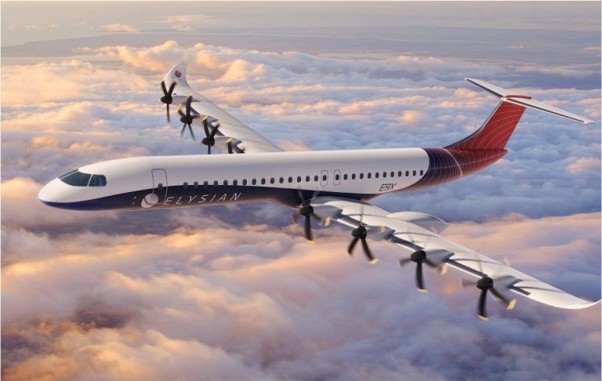
Electric aircraft could soon make some of Europe’s shortest flights cleaner, quieter and less dependent on jet fuel, with routes of less than 500 kilometres emerging as the most likely early market.
A European Union Aviation Safety Agency (EASA) analysis found that 25% of flights in Europe cover less than 500 kilometres. That distance is increasingly within reach of battery-electric aircraft being developed for the end of this decade.
Hybrid-electric aircraft could potentially extend that range to around 1,000 kilometres.
The change could be particularly significant for routes linking islands and regional cities where trains are not a practical alternative.
Opportunities in Europe include London-Dublin, Europe’s busiest international air route; but also Barcelona-Ibiza, Bordeaux-Lyon, Nice-Bastia, Berlin-Düsseldorf, Frankfurt-Munich, Athens-Santorini, Rome-Olbia, Naples-Palermo, Copenhagen-Aalborg, Stockholm-Gothenburg, Oslo-Bergen, Lisbon-Porto, Madrid-Valencia and Vienna-Budapest.
Island routes could be particularly well suited to electric aircraft because passengers have few alternatives to flying. Similar opportunities exist for connections between smaller regional airports that currently require a connection through a major hub.
A passenger traveling from Rennes to Bastia, for example, could eventually fly directly rather than traveling overland to Paris before continuing to Corsica.
The technology has advanced rapidly. Higher power density has allowed manufacturers to develop lighter and more efficient electric motors, while distributed propulsion and new battery integration concepts could eventually support aircraft significantly larger than the small demonstrators that initially dominated the sector.
Other benefits beyond lower emissions.
Electric aircraft are expected to be considerably quieter than conventional jets, potentially reducing noise around airports. They could also make smaller regional airports more economically viable by enabling direct links between medium-sized cities.
Another attraction is reduced exposure to oil-price shocks. Because battery-electric aircraft do not use jet fuel, they would not be directly affected by the kind of fuel-price spikes and supply disruptions that can force airlines to raise fares or cut capacity.
Carlos López de la Osa, aviation technical manager at Transport & Environment, said electric and hybrid aircraft could help make short-haul aviation more sustainable while reducing dependence on imported fossil fuels.
Several European start-ups are already developing aircraft for this emerging market.
Germany’s VÆRIDION is developing a nine-seat electric regional aircraft designed to fly between 400 and 550 kilometres, depending on payload. It is targeting passenger certification by 2030.
Dutch aerospace company Elysian Aircraft is developing a 90-seat battery-electric aircraft with a proposed range of up to 1,000 kilometers. It is targeting entry into service around 2035 and is working with KLM on the concept.
France’s AURA AERO is developing a 19-seat hybrid-electric regional aircraft with a range of up to 1,500 kilometres. Certification is targeted for late 2029, with larger 40- to 90-seat aircraft planned later.
AURA AERO says hybrid-electric technology could cut direct operating costs by about 50% and reduce emissions by as much as 80%, depending on the operation.
The European Union is also signalling support for electric aviation, including proposals to make electric aircraft eligible for investment mechanisms currently focused on sustainable aviation fuels.
For travellers, the biggest change could ultimately be the ability to fly short regional routes without the traditional combination of high fuel consumption, airport noise and carbon emissions.
If battery technology, certification and infrastructure continue to advance, some of Europe’s shortest flights could become the first commercial proving ground for a very different type of aviation.