
Cyprus Schengen entry delayed by two key hurdles
01 Oct 2026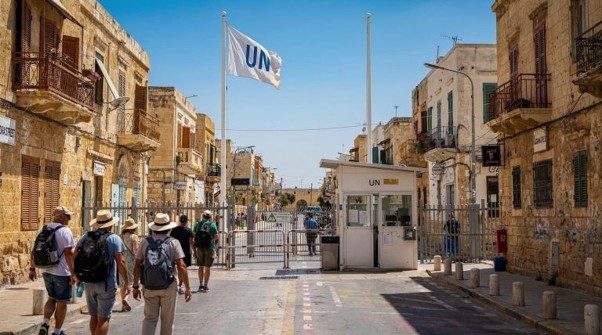
Local news paper Cyprus Mail reported the information on September 29.
It could be considered as a blow for Cyprus government, especially as the European Commission has concluded that the country is technically ready to join the passport-free zone following its latest Schengen evaluation. The assessment was adopted in July and has now moved to the EU Council, where the Schengen countries must ultimately approve the removal of internal border controls for Cyprus.
However, the decision has been delayed by the unique situation surrounding the island’s Green Line, as well as questions concerning two British sovereign base areas.
Cyprus has been divided since 1974, when Turkey intervened militarily following a coup backed by Greece’s military junta. The internationally recognized Republic of Cyprus controls the southern part of the island, while the Turkish Cypriot administration controls the north. Only Turkey recognizes the self-declared Turkish Republic of Northern Cyprus.
The two sides are separated by the UN-patrolled Green Line, which also cuts through the capital, Nicosia.
Although the entire island is legally EU territory, EU law is suspended in the north because the Republic of Cyprus does not exercise effective control there. The EU therefore operates special rules governing movement across the Green Line.
This creates a problem for Schengen. Once Cyprus joins, its airports and other external borders would become part of the Schengen border system. Brussels must establish how Green Line crossings can continue to operate without creating a gap in Schengen’s external-border controls. The Green Line could then be turned into a hard border or have as Europe would have to track people entering and leaving the Schengen zone.
Turkey is part of the wider political complication. Ankara does not recognize the Republic of Cyprus and maintains close relations with the Turkish Cypriot administration. Turkey also does not permit direct air, maritime or trade links with the Republic of Cyprus.
The issue is therefore not that Turkey has to approve Cyprus joining Schengen. Rather, the unresolved Cyprus conflict creates a border situation unlike that of other EU members.
EU officials are also examining checks at two crossing points located inside Britain’s Sovereign Base Areas.
For travelers, little changes for now. Cyprus remains outside Schengen, meaning passengers arriving from Schengen countries continue to undergo passport checks. Brussels has now to solve a unique legal problem created by the island’s division before internal border controls can disappear.