
Iran conflict continues to drag down Middle East air traffic
17 Aug 2026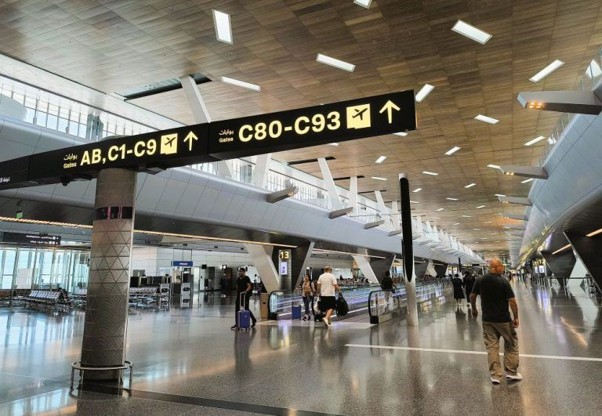
Main factors for that decline are the Iran conflict, airspace restrictions and higher fuel costs which continued to disrupt airline operations.
IATA latest figures also confirmed that the Middle East remained the biggest drag on global aviation, although the pace of decline eased sharply from May.
Middle Eastern airlines recorded a 13.9% year-over-year drop in passenger demand in June, compared with a 28.8% decline in May. Capacity was down 11.3%, pushing the regional passenger load factor 2.3 percentage points lower to 76.1%.
IATA said the improvement reflected a further normalization of operations following the ceasefire, along with an easier comparison with June 2025, when US/Israel military strikes against Iran had already disrupted traffic.
The disruption remains however particularly significant for Gulf airlines, whose business models depend heavily on connecting passengers through major hubs such as Dubai, Doha and Abu Dhabi.
International passenger demand fell 0.9% globally in June. Excluding the Middle East, however, international traffic increased 1.1%, highlighting the extent to which the regional crisis is distorting the global market.
Non-Gulf-based international air carriers vanishing
Most Gulf carriers have resumed services, but operations remain below normal. Emirates CEO Tim Clark said in June that the airline was operating at about three-quarters of capacity.
Meanwhile, European and Asian carriers remain cautious about returning to the region. The European Union Aviation Safety Agency has anyway advised operators to avoid the airspace of Bahrain, Kuwait, Qatar, the UAE and part of the Gulf of Oman through August 31.
Air France is targeting a late-August restart on some services, Lufthansa expects to return in September, while British Airways, Cathay Pacific and Singapore Airlines are targeting late October. Air Canada does not expect to resume some services before January 2027.
The most visible sign of international airlines’ disaffection for the Gulf is the presence of stationed planes at Middle Eastern airports. There are hardly any international airlines to be seen outside the national carrier.
This is also confirmed by the latest analysis from OAG air transport consulting company which analysed seats capacity for Gulf airports in July.
Recently published statistics for June 2026 by the International Air Transport Association IATA highlighted that global passenger traffic fell 1.7% year over year, extending the contraction into a third consecutive month.
Main factors for that decline are the Iran conflict, airspace restrictions and higher fuel costs which continued to disrupt airline operations.
IATA latest figures also confirmed that the Middle East remained the biggest drag on global aviation, although the pace of decline eased sharply from May.
Middle Eastern airlines recorded a 13.9% year-over-year drop in passenger demand in June, compared with a 28.8% decline in May. Capacity was down 11.3%, pushing the regional passenger load factor 2.3 percentage points lower to 76.1%.
IATA said the improvement reflected a further normalization of operations following the ceasefire, along with an easier comparison with June 2025, when US/Israel military strikes against Iran had already disrupted traffic.
The disruption remains however particularly significant for Gulf airlines, whose business models depend heavily on connecting passengers through major hubs such as Dubai, Doha and Abu Dhabi.
International passenger demand fell 0.9% globally in June. Excluding the Middle East, however, international traffic increased 1.1%, highlighting the extent to which the regional crisis is distorting the global market.
Non-Gulf-based international air carriers vanishing
Most Gulf carriers have resumed services, but operations remain below normal. Emirates CEO Tim Clark said in June that the airline was operating at about three-quarters of capacity.
Meanwhile, European and Asian carriers remain cautious about returning to the region. The European Union Aviation Safety Agency has anyway advised operators to avoid the airspace of Bahrain, Kuwait, Qatar, the UAE and part of the Gulf of Oman through August 31.
Air France is targeting a late-August restart on some services, Lufthansa expects to return in September, while British Airways, Cathay Pacific and Singapore Airlines are targeting late October. Air Canada does not expect to resume some services before January 2027.
The most visible sign of international airlines’ disaffection for the Gulf is the presence of stationed planes at Middle Eastern airports. There are hardly any international airlines to be seen outside the national carrier.
This is also confirmed by the latest analysis from OAG air transport consulting company which analysed seats capacity for Gulf airports in July.
Kuwait stands out as the biggest capacity loser in the Middle East by absolute volume, with 277,500 fewer seats than in July 2025. Its 27.3% decline was substantially worse than the regional average. Kuwait airport is suffering the most as it is the regular target of Iranian missiles and drones due to a strong U.S. military presence.
Dubai was still 17.4% below its July 2025 seat capacity, but was back last month as the world’s busiest international airport. Doha Hamad International was down 8.6% matching Bahrain at -8.5%; the latter is also a regular target of Iranian attacks due to the U.S. largest military presence in the region.
Muscat was more resilient, with capacity down 7.6% year over year to about 730,000 seats, while Abu Dhabi was essentially back to last year’s capacity at just 0.1% below July 2025.
IATA expects net loss of $4.3 billion
Coming back to IATA figures, traffic between the Middle East and Asia fell 11.6%, although that was a substantial improvement from the 25.6% decline in May. The load factor on the route dropped two percentage points to 71.5%.
The Middle East-North America market also showed signs of recovery. Traffic declined just 1.9%, compared with a 28.3% plunge in May. However, load factors still fell two percentage points to 84%.
The financial impact is consequently mounting. IATA forecasts that Middle Eastern airlines will swing from a $7.2 billion net profit in 2025 to a $4.3 billion loss in 2026.
Globally, IATA expects passenger demand to grow just 2.1% in 2026, significantly slower than in previous years, as the conflict and resulting energy shock push up airline costs and consumer airfares. With no short-term improvement in sight for the time-being.